6 Ingredients to Build a Vegan Skincare or Haircare Line
A vegan skincare or haircare line needs more scrutiny than just avoiding the obvious animal ingredients — beeswax, lanolin and some forms of keratin and collagen show up in less obvious places too. These six ingredients give you a genuinely plant- or synthetically-derived starting point across the core formulation jobs.
1. Mango Butter (base butter)
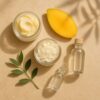
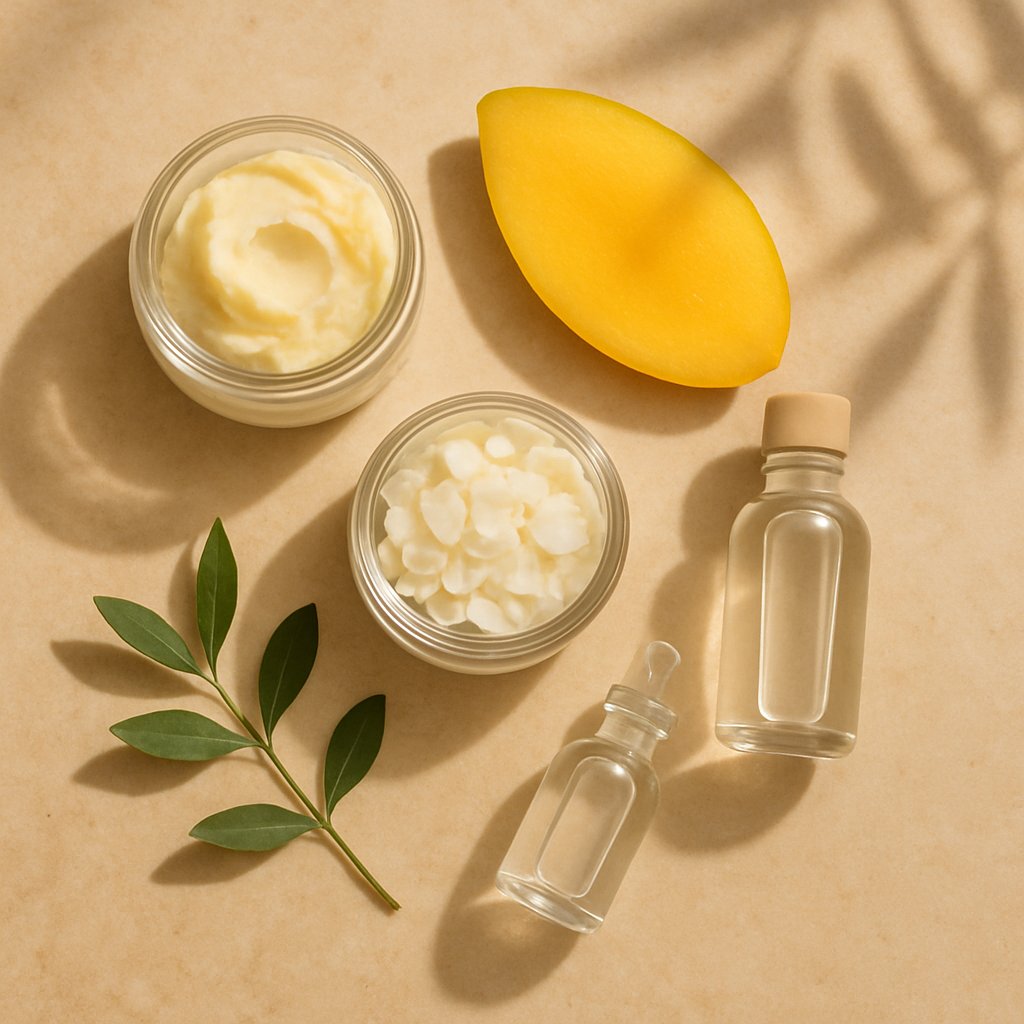
Mango Butter is entirely plant-derived, with a lighter finish than shea butter — a solid, vegan-friendly base for whipped body butters, sticks and balms.
2. Synthetic White Beeswax (structuring wax)
Standard beeswax is, obviously, not vegan. Synthetic White Beeswax delivers the same structuring performance in balms and sticks without any animal-derived material.
3. Decyl Glucoside and Coco Glucoside (cleansing surfactants)
Decyl Glucoside and Coco Glucoside are both plant-derived, mild cleansing surfactants — a genuinely vegan-friendly cleansing base for shampoo and body wash formulations, with no animal-derived processing aids involved.
4. BTMS 85 (conditioning emulsifier)
BTMS 85 (Behentrimonium Methosulfate) is synthesised from plant-derived fatty acids rather than animal sources, making it a suitable conditioning emulsifier for a vegan-positioned hair range — always confirm current sourcing documentation from your supplier if vegan certification is a formal requirement for your brand.
5. Vegetable Glycerine USP (humectant)
Glycerine can be sourced from either plant or animal fat — ours is explicitly Vegetable Glycerine USP, plant-derived, making it safe to include without the sourcing ambiguity that “glycerine” alone on an ingredient list can carry.
6. Guar Quat (conditioning polymer)
Guar Quat is derived from guar gum, a plant source, giving you a natural-origin conditioning polymer alternative to some synthetic conditioning agents in a vegan hair care formula.
A note on claims and certification
Choosing plant-derived ingredients is the formulation side of building a vegan range — but a “vegan” claim on packaging typically requires broader diligence too: processing aids, cross-contamination controls, and in some markets formal certification. Check current requirements for your target market before making a vegan claim on a finished, saleable product.
Where to start
New to formulating a vegan range? Read How to Start a Skincare Business in South Africa on a Small Budget for the broader practical steps beyond ingredient selection.