Cetearyl Alcohol vs Cetyl Alcohol: What’s the Difference?
These two names are similar enough that new formulators often assume they’re interchangeable, or even the same ingredient under two names. They’re related, but they play slightly different roles in a formula.
What they have in common
Both Cetearyl Alcohol and Cetyl Alcohol are fatty alcohols — despite the name, nothing like drinking alcohol, and not drying to skin the way that word might suggest. Both function as co-emulsifiers and thickeners, adding body and stability to lotions and creams, and both leave a silky, non-greasy after-feel.
The actual difference
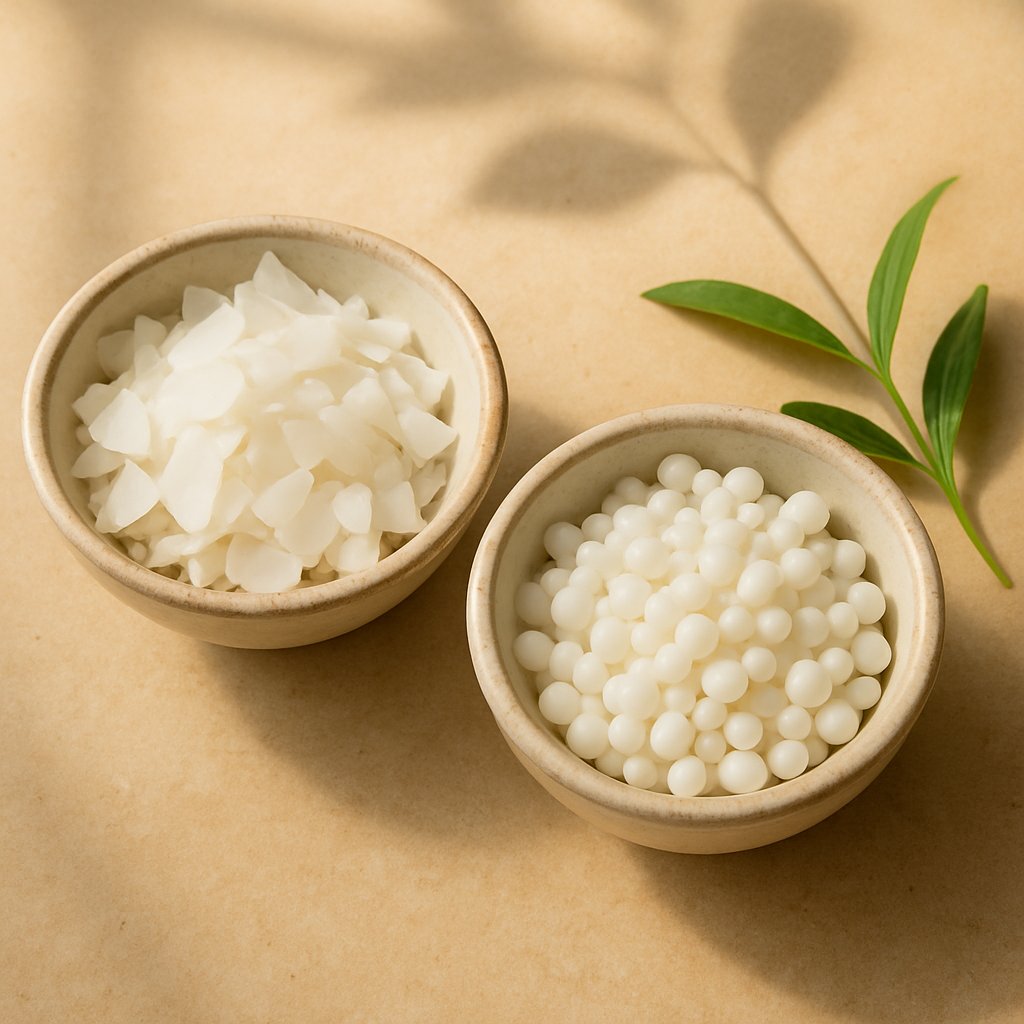
Cetearyl alcohol is a blend of cetyl alcohol and stearyl alcohol together, while cetyl alcohol on its own is a single fatty alcohol. That blended composition gives cetearyl alcohol a slightly firmer, waxier structure and stronger thickening power. Cetyl alcohol alone is lighter, adding glide and mild thickening without the extra firmness cetearyl’s stearyl content contributes.
When to use cetearyl alcohol
Reach for Cetearyl Alcohol when you need meaningful thickening and stabilising power — richer creams, balms, and emulsions that need real body. It’s also the more common choice as a co-emulsifier alongside a primary emulsifier like Emulsifying Wax NF.
When to use cetyl alcohol
Cetyl Alcohol is the better choice when you want glide and a silky finish without adding much firmness — lighter lotions, hair conditioners where you don’t want heaviness, or any formula where cetearyl’s extra thickening would push the texture further than you want.
Can you use both?
Yes, and some formulations do — cetearyl alcohol for structural thickening, with cetyl alcohol layered in for extra glide, particularly in richer cream formulations. As always, small-batch testing is the only reliable way to confirm a specific combination gives you the texture you’re after.
Read more
For the full range of waxes and thickeners we stock, see our Waxes & Thickeners category, or read our Beginner’s Guide to Cosmetic Emulsifiers for how these fit alongside true emulsifiers.