5 Essential Oils Every Natural Formulator Should Know
Essential oils get formulated for fragrance far more often than for their functional properties — but several of the most common ones earn their place in a formula on more than scent alone. Here are five worth knowing well.
1. Tea Tree Oil — for blemish-prone formulations
Tea Tree Oil has a clean, medicinal scent that’s become closely associated with a specific job: formulations aimed at blemish-prone skin and scalp care. It’s one of the more functional essential oils on this list, reached for as much for its reputation in blemish-focused products as for its aroma.
2. Lavender Essential Oil — for calming, relaxation-themed products
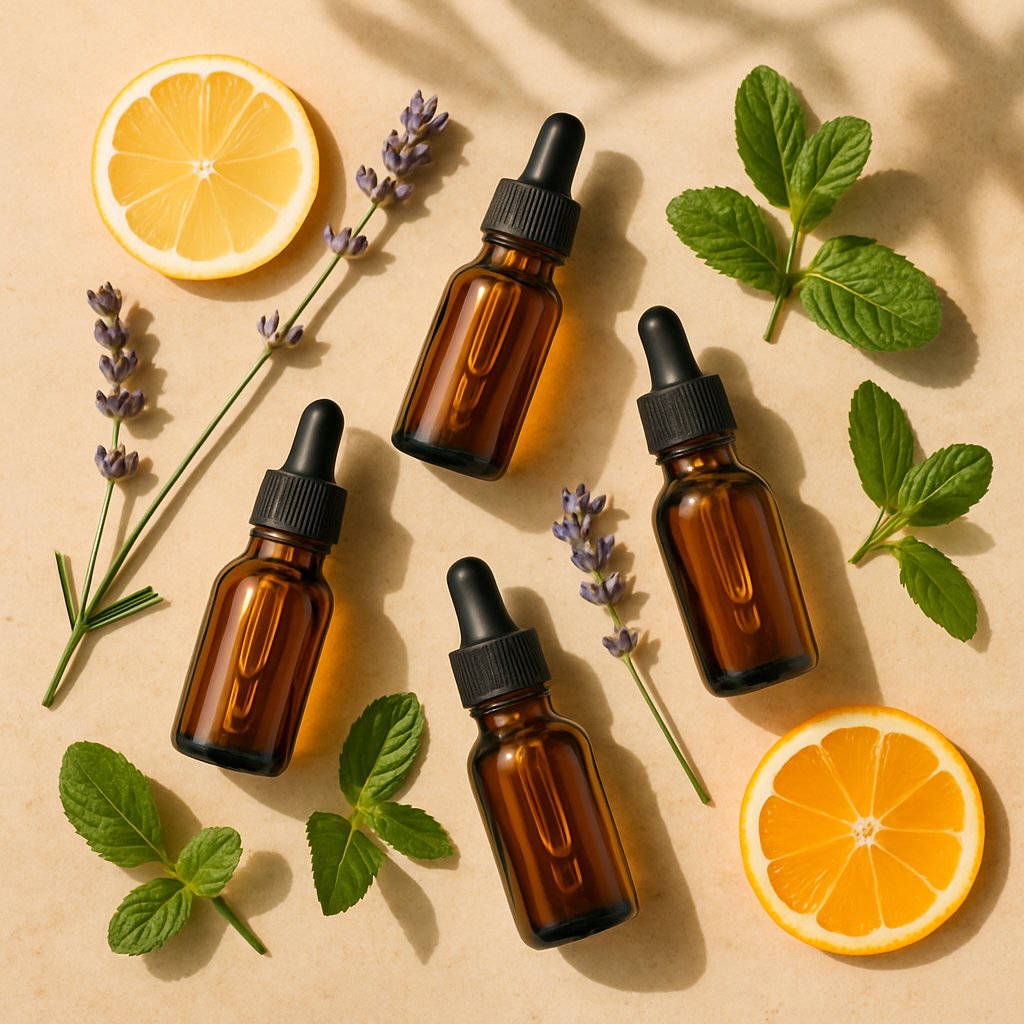
Lavender Essential Oil is close to a universal staple in relaxation-positioned skin and body care — bath products, pillow mists, calming balms. Its floral-herbaceous character is instantly recognisable to most customers, which makes it an easy sell in a calming-themed range.
3. Peppermint Oil — for scalp and foot care
Peppermint Oil brings a genuine cooling sensation alongside its sharp minty scent, which is why it turns up so often in scalp treatments and foot care products specifically — categories where that tingling, invigorating effect is the whole point.
4. Eucalyptus Oil — for invigorating, respiratory-adjacent blends
Eucalyptus Oil‘s fresh, camphoraceous scent is unmistakable, and it’s a natural fit for balms and body care positioned around invigoration or a “clear the head” kind of freshness.
5. Citrus oils — Orange and Lemon — for bright, uplifting formulations
Orange Oil and Lemon Oil both bring an immediately recognisable brightness to a blend. Orange leans warm and uplifting; lemon leans fresh and cleansing. Both are popular in bath and body ranges built around a mood-lifting positioning.
A note on usage rates
Essential oils are potent — most cosmetic formulations use them at well under 1% of total batch weight, and some (like tea tree and peppermint) have specific maximum usage guidelines depending on the finished product category. Always check current safety guidance for your specific application before finalising a formula.
Essential oil or fragrance oil?
If you need a specific, complex scent that a single essential oil can’t deliver — a strawberry or vanilla-cocoa profile, for example — that’s the territory of fragrance oils rather than essential oils. Worth knowing the difference before you go looking for an essential oil that simply doesn’t exist in nature.
Want the full picture? Read our complete Essential Oils guide, covering safe usage rates, blending and how essential oils differ from fragrance oils.