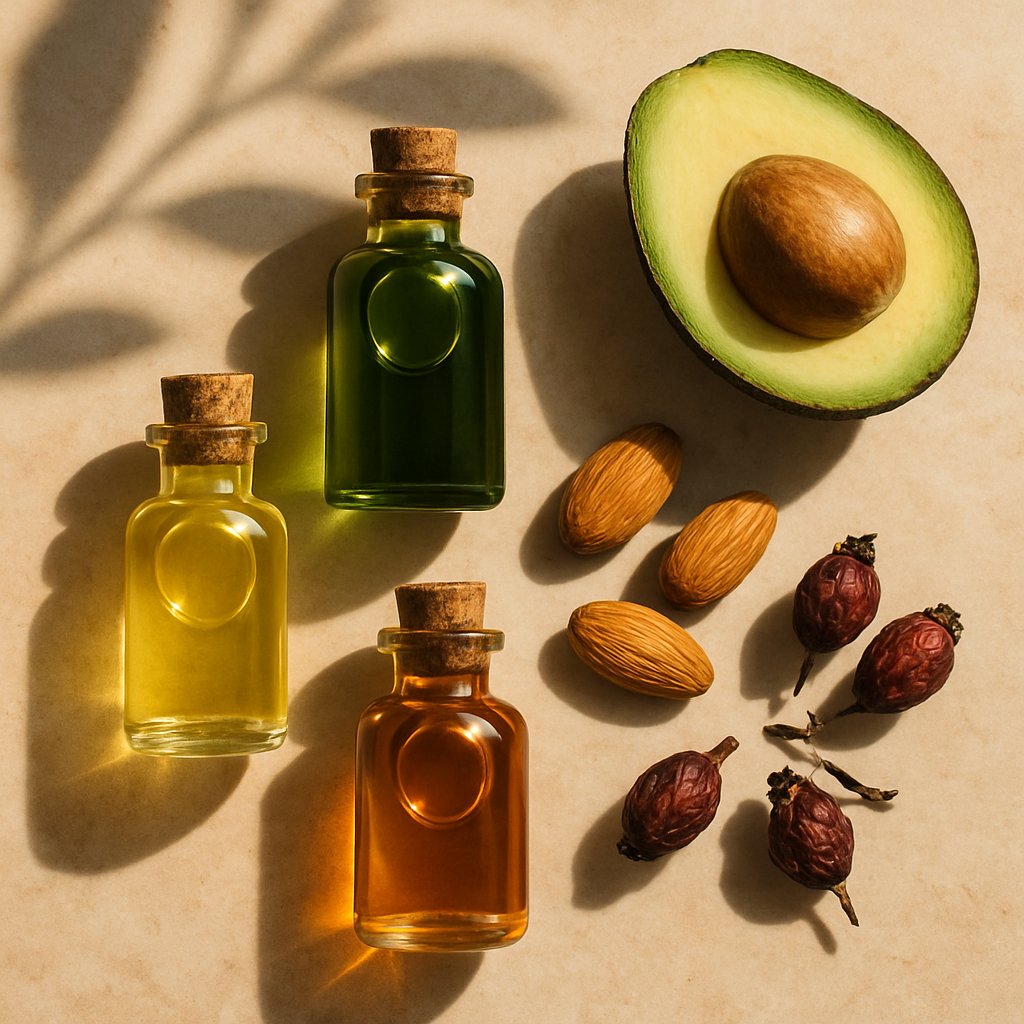
The Ultimate Guide to Carrier Oils for Skin and Hair
Walk into any formulation and you’ll almost always find a carrier oil doing the quiet work of carrying everything else — actives, fragrance, texture — onto skin or hair. But “carrier oil” isn’t one ingredient, it’s a whole category, and the differences between them matter more than most beginners expect.
What actually differs between carrier oils
Three things drive how an oil behaves on skin: its fatty acid profile, its viscosity, and how it oxidises over time. A high-linoleic oil like Grapeseed Oil absorbs fast and feels almost weightless, while a high-oleic oil like Avocado Oil sits richer and heavier — better suited to drier skin or colder climates. Viscosity is its own variable entirely: Castor Oil is thick and glossy, which is exactly why it turns up in lip glosses and hair oils where shine and slip matter more than fast absorption.
Lightweight oils for facial formulations
Grapeseed Oil and Jojoba Oil are the two we’d point a facial-oil formulator toward first. Jojoba is technically a liquid wax ester rather than a true oil, which gives it excellent shelf stability and a finish that closely resembles skin’s own sebum. Grapeseed is genuinely one of the lightest oils available, with almost no scent of its own — useful when you don’t want the carrier competing with a fragrance or essential oil blend.
Richer oils for balms, butters and mature-skin blends
When a formula needs more cushion, Avocado Oil and Macadamia Oil are worth reaching for. Macadamia’s palmitoleic acid content mirrors young skin’s own sebum composition, which is part of why it’s become a favourite in anti-ageing blends. Argan Oil sits in between — lightweight in feel but rich in vitamin E, making it equally at home in a hair serum or a facial oil.
Specialty and indigenous oils
South African formulators have easy access to a set of oils that are harder to source elsewhere: Organic Baobab Oil, Organic Marula Oil, Organic Kalahari Melon Oil and Organic Rosehip Oil. Rosehip in particular is worth knowing well — its linoleic and linolenic acid content, plus natural vitamin A precursors, make it a genuinely useful ingredient in scar- and blemish-focused formulations, not just a marketing claim.
Choosing between the three castor oils
We stock three versions of castor oil for a reason. Standard Castor Oil is the practical, everyday choice. Organic Cold Pressed Castor Oil gives you the same thick, glossy profile with a milder scent and an organic-certified ingredient list. Jamaican Black Castor Oil is traditionally roasted before pressing, giving it a darker colour and a toasted aroma that’s become closely associated with hair and scalp oil blends specifically.
A simple rule of thumb
If you’re not sure where to start: pick a lightweight oil (Grapeseed or Jojoba) as your base carrier, and layer in a richer specialty oil (Argan, Marula or Rosehip) at 10–20% of your oil phase for targeted benefits. That combination gives you a formulation that absorbs well without losing the specific properties you’re formulating for in the first place.
Want the full picture? Read our complete Carrier Oils guide, or see how two popular lightweight oils compare in Jojoba Oil vs Argan Oil.